IMPORTANT: Abscesses require immediate surgical drainage. Antibiotics alone simply mask the problem and are not a sufficient treatment.
What is a Perianal Abscess?
A perianal abscess is an acute inflammatory condition characterized by the accumulation of pus in a cavity around the anus. It is a serious condition that requires prompt medical attention.
Signs and Symptoms
- Severe pain in the anal area
- Swelling and redness around the anus
- Fever and chills (especially in deeper abscesses)
- Pus discharge (if the abscess ruptures spontaneously)
Causes
The most common cause is infection originating from an internal anal gland (fistula). Other causes include:
- Hidradenitis suppurativa
- Boils or furuncles
- Crohn’s disease
- Minor injuries
- Chronic constipation
Diagnosis
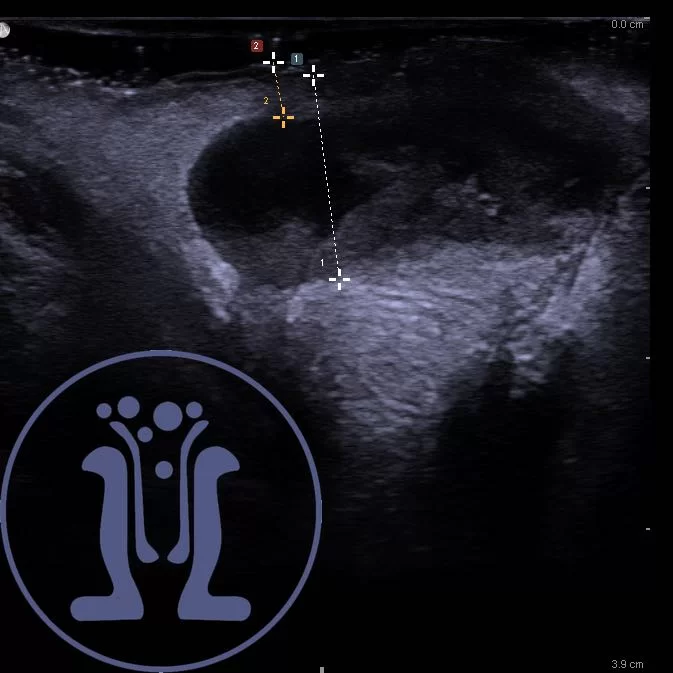
Diagnosis includes both clinical examination and imaging studies. Accurate mapping of the abscess is essential for effective treatment with minimal surgical trauma.
Diagnostic Mapping Techniques
- Endoanal Ultrasound
Primary diagnostic tool
Provides real-time, high-resolution imaging
Reveals precise anatomy including sphincters
Painless and non-invasive
Determines the location and depth of the abscess - MRI
Useful for complex or deep infections
Provides detailed soft tissue imaging
May sometimes yield unclear results
Treatment
Immediate Surgical Drainage
- Urgent surgical drainage is the mainstay of treatment
- Delay can lead to:
- Spread of infection
- Involvement of sphincter muscles
- Risk of sepsis
- When pre-operative mapping is done correctly, drainage can often be performed under local anesthesia
Important Treatment Notes
- Antibiotics alone are inadequate and inappropriate
- They may temporarily relieve symptoms but do not cure the abscess