
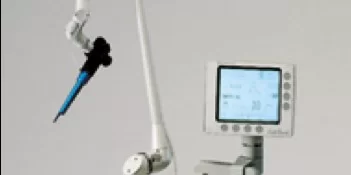
At our clinic, we utilize state-of-the-art CO₂ and diode lasers for procedures like FiLaC (Fistula Laser Closure), SiLaC (Sinus Laser Closure), and LHP (Laser Hemorrhoidoplasty). These laser techniques offer minimally invasive options with faster healing and greater comfort for our patients.
CO₂ Laser
Perfect for superficial lesions, the CO₂ laser is absorbed by water in tissue, allowing for precise cutting and vaporization. It is ideal for treating anal fissures, warts, and low-grade hemorrhoids while preserving surrounding healthy tissue.
Diode Laser
Diode lasers are excellent for vascular treatments. Their energy is absorbed by hemoglobin, making them ideal for hemorrhoids and fistulas where blood control is essential. Diode lasers penetrate deeper and are perfect for advanced proctological applications.
CO₂ vs. Diode Laser: Key Differences
- Penetration Depth: CO₂ is superficial, diode is deeper.
- Tissue Target: CO₂ targets water; diode targets blood vessels.
- Application: CO₂ is used for surface procedures; diode is used for vascular and deeper treatments.
FiLaC – Fistula Laser Closure
This diode laser technique treats anal fistulas by vaporizing the fistula tract from the inside. It avoids cutting the sphincter, maintaining continence and reducing recovery time. Suitable for high or complex fistulas with success rates around 60–80%.
SiLaC – Pilonidal Sinus Laser Closure
SiLaC is the laser treatment of choice for pilonidal disease. It’s minimally invasive, performed through a small opening, and allows rapid return to daily activities with minimal post-op pain.
LHP – Laser Hemorrhoidoplasty
Ideal for Grade II and III hemorrhoids, LHP shrinks hemorrhoids using laser energy, promoting fibrosis without excising tissue. It’s a modern, less painful alternative to traditional hemorrhoidectomy with very fast recovery.
Conclusion
CO₂ and diode lasers offer unmatched precision and effectiveness in proctology. At our clinic, we use these tools to offer patients safer, faster, and less painful solutions for common anorectal conditions.
